In 2010, I was at BlackBerry, knee‑deep in NFC promotions. The future seemed obvious: NFC would replace clunky, insecure technologies like QR codes. Why bother scanning a square of pixels when you could simply tap your phone — no search, no friction, no guessing which app to use?
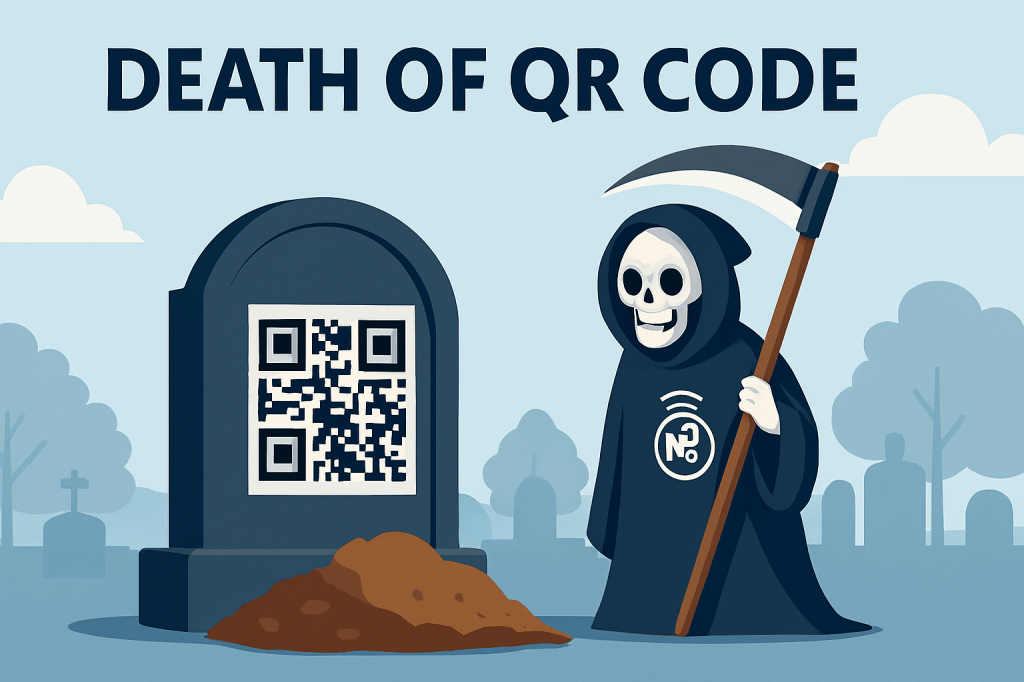
For a while, that prediction looked right. QR codes began to fade. You’d see them occasionally, but they felt like relics of the early mobile web.
Then came 2020. And just like that, a global pandemic breathed new life into a technology I thought was on its way out.
Why QR Codes Refuse to Disappear
- 1. Simplicity beats elegance — at least in the short term. A QR code can be printed on paper, slapped on a wall, and scanned by nearly any smartphone without specialized hardware. The setup cost is basically zero. That matters in a world where budgets and timelines are tight.
- 2. The “good enough” trap. In innovation theory, disruptive technologies don’t die instantly; they linger if they keep solving a problem well enough. QR codes aren’t perfect — they’re insecure, ugly, and easy to fake — but for many use cases, they work just enough to stay relevant.
- 3. Ecosystem inertia. Entire marketing teams, POS systems, and ticketing flows are already built around QR codes. Re‑platforming to NFC requires not just technology upgrades but new thinking in process and UX. Many businesses avoid that leap until pain outweighs effort.
- 4. COVID made them default again. Menus, event check‑ins, vaccine records — QR codes were the quickest, cheapest way to enable “contactless.” The behavior stuck, and now scanning feels normal to millions.
Why NFC Still Wins the Long Game
NFC wallet passes don’t need a search bar, don’t require the camera, and can offer built‑in security, dynamic updates, and true “tap‑and‑go” experiences. They remove mental steps for the user, which is often the biggest barrier to adoption.
Think about this: when was the last time you tapped your credit card and thought, I wish I could type my card number instead? That’s the NFC value proposition for loyalty, tickets, and access control.
A Fresh Insight: QR Codes as the “Gateway Drug” to NFC
Instead of framing QR codes purely as outdated competition, we can see them as the on‑ramp.
- Businesses already using wallet passes with QR can upgrade to NFC in phases.
- Developers can build hybrid flows — QR to install the pass, NFC to redeem or check in.
- It flips the story from “replace QR” to “evolve from QR.”
This reframing makes the conversation less about replacing tech and more about upgrading the experience — a far easier sell.
Reframing the Bet
In 2010, I bet big that NFC would kill the QR code. For a while, it looked like I’d called it. Then COVID happened — and the square‑pixel relic roared back.
Now I’m back to working with NFC wallet passes at PassNinja, and I’m placing my bet again. But this time, it’s not about declaring the death of QR — it’s about its evolution. I still believe NFC is the future, but instead of erasing what came before, we can build on it. The goal remains the same: replace QR with something faster, smarter, and more seamless — a natural next stage in its lifecycle.
From the beginning, PassNinja’s NFC wallet passes have been built with capabilities that QR simply can’t match:
- Autoselect – The right pass surfaces instantly on tap, no app‑hunting required
- Security – Built‑in encryption and secure element storage keep data safe
- Always Ready – Works even without an internet connection once installed
- Frictionless UX – No camera alignment, screen glare, or load‑time delays
- Multi‑Platform Support – Seamless experience across Apple Wallet & Google Wallet
- Dynamic Content Updates – Passes can refresh with new info without re‑issuing
- Brandable & Rich Media – Logos, colors, and images for a fully on‑brand experience
 cybercuriosity.tech
Leave a comment